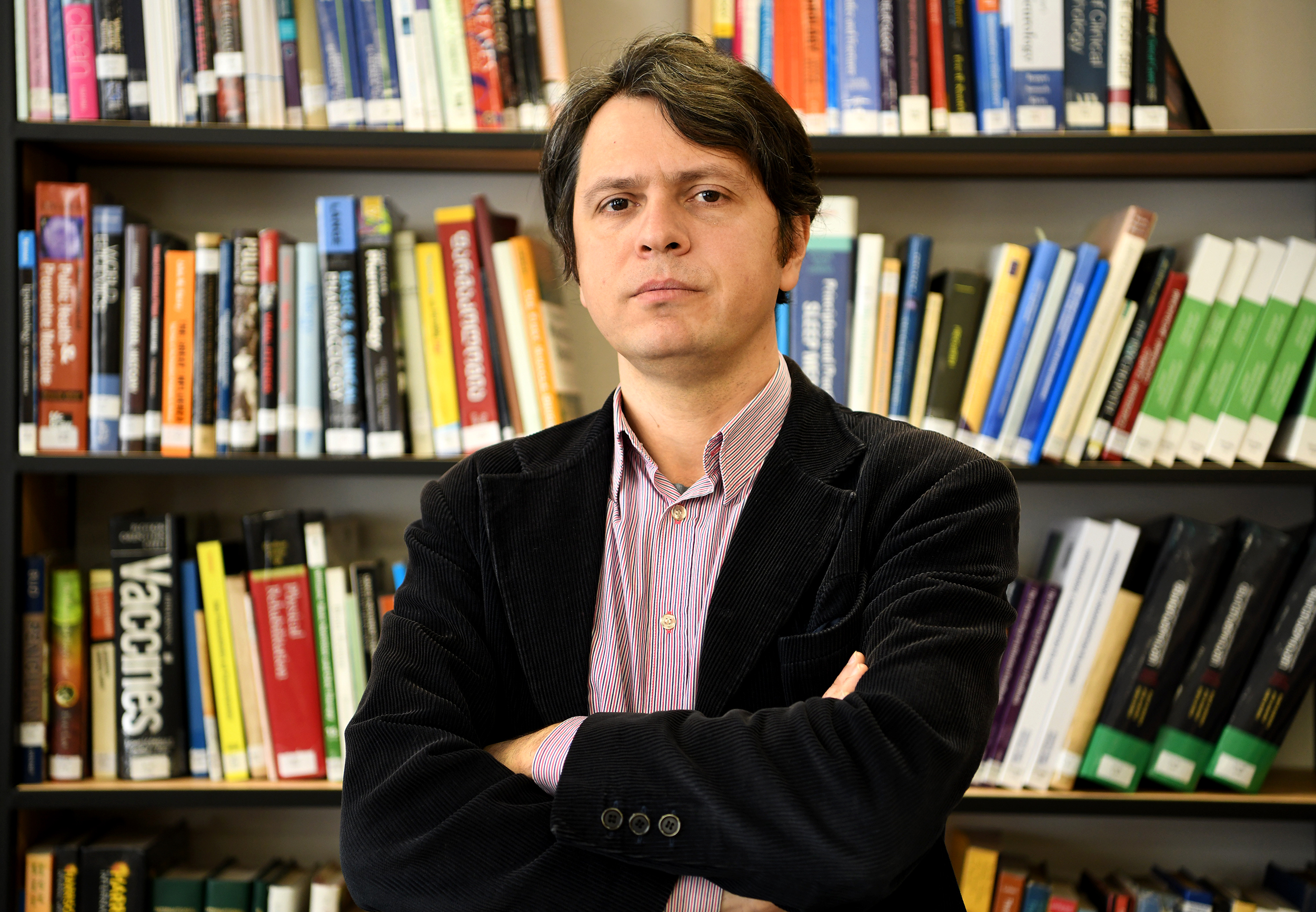
Giorgi Meladze[1]
Introduction
The judgment in Miladze v. Georgia was decided under Article 10 of the European Convention on Human Rights. The Court unanimously accepted that the applicant’s administrative conviction and fine were compatible with Article 10 of the Convention. The case concerned a TikTok video in which the applicant, who worked as a courier, complained about the mismanagement of public roads, abuse of power and violations of traffic rules by public officials. As part of that criticism, he used crude insults, including: “You are acting like a bunch of motherfuckers who think you are better than everyone else. How exactly are you better than us? You are not better than us at all. Go fuck your mothers. Tell me, what makes you better than us?” The Court gave weight to the nature of the language, its sexually explicit content, the wide reach of the video, and the domestic courts’ attempt to distinguish political criticism from personal denigration. It also referred to TikTok’s capacity for rapid dissemination, including among younger users. The Court’s press release summarized the outcome as a case involving “no breach of freedom of expression in [a] viral TikTok case.”
At first sight, it appears to concern the limits of vulgar, insulting and sexually explicit political expression on TikTok, directed at public officials. Read in isolation, it may look like a routine application of the Court’s case law on gratuitous insult, public order and proportionality. Read in context, however, the judgment becomes far more troubling. It was delivered at a moment when the Georgian authorities are expanding legal, administrative and informal mechanisms for disciplining political dissent. In such circumstances, we already observe how the judgment is used domestically not as a narrow ruling on abusive language, but as a legitimating tool for the political control of speech.
The aim of this post is not to defend the applicant’s language. The problem lies elsewhere. The Article 10 interest at stake cannot be reduced to the speaker’s lack of taste when the state restricting speech is itself operating in a context of democratic backsliding, selective enforcement and pressure on critical voices. In such cases, context is not background. It is part of the legal question.
The doctrine behind the decision
This reasoning is doctrinally recognizable. The Court has long held that freedom of expression protects speech that offends, shocks or disturbs, but it has never suggested that every form of insult is protected merely because it appears in a political setting. The difficulty with Miladze is therefore not that it invents a wholly new doctrine. The difficulty is that it applies the well-established doctrine of context without serious consideration of the institutional and political setting in which the speech was punished, thereby producing a decision in a vacuum, itself at odds with the Court’s practice.
The judgment treats the domestic legal process as if it operated in an ordinary democratic environment, where courts neutrally balance public order, dignity and freedom of expression. Indeed, every reference to democracy in the case is either associated with the language of the Convention or with the word “normal”, which is puzzling, to say the least. By the time the case was decided, Georgia already had sanctioned judges, and its judiciary had been criticized for political bias and manipulation. Georgia is experiencing sharp democratic decline and was recently criticized by the OSCE/ODIHR Moscow Mechanism report on Georgia, published in March 2026, for restrictions on freedom of expression and assembly, politically motivated proceedings, pressure on civil society and the media, and the misuse of legal institutions against opposition and critical expression. ODIHR has also warned that recent Georgian legislation affecting civil, political and expressive rights contains vague terms and creates risks of arbitrary enforcement. Since 2024, the EU, individual European states and the Council of Europe itself have criticized Georgia for serious violations of human rights and abuse of power, including through sanctions against public officials, judges and prosecutors.
This matters for Article 10. A sanction that may appear moderate in a consolidated democracy can acquire a different meaning in an authoritarian or semi-authoritarian institutional environment. A fine imposed for vulgar speech is not only a financial penalty. It also sends a signal to others that harsh criticism of officials carries legal risk. It produces a chilling effect not because the sanction is severe in the abstract, but because it fits into a wider pattern of state pressure.
Miladze does not adequately ask whether the domestic courts operated within such a pattern. It does not seriously examine whether the state’s interest was genuinely the protection of dignity and public order, or whether the sanction formed part of selective and politically motivated enforcement. The judgment sees insult, platform, fine and formal balancing. It pays far less attention to the institutional environment in which those elements acquire meaning.
Online criticism as a political challenge
One will fail to grasp the contextual meaning of the decision without understanding the role of online expression in Georgian political life. Social media is not merely a space of vulgarity, exaggeration and emotional reaction. It has become one of the few arenas where citizens, activists, journalists and public figures can still challenge official narratives quickly and visibly. Online criticism matters because other democratic channels have already substantively deteriorated.
This is also why online expression has long been a problem for the Georgian government. Critical voices face not only formal legal pressure, but also coordinated online harassment, Facebook troll networks, state-aligned propaganda, public stigmatization and administrative intimidation. The Moscow Mechanism report refers to a broader pattern of pressure on critical voices and raises concerns about disinformation by media linked to the ruling party, restrictions on freedom of expression and media freedom, politically motivated arrests and prosecutions, and harassment of opposition politicians, human rights defenders and journalists. Human Rights Watch also summarized the report as documenting a pattern of violence and other abuses against protesters, journalists, political opposition figures and government critics, combined with near-total impunity.
In such an environment, the line between regulating abusive speech and disciplining dissent is fragile. A government that tolerates or encourages aggressive rhetoric from its own side while punishing the vulgarity of its critics is not protecting civic discourse. It is controlling the terms on which opposition can speak.
This selective structure should have been central to the Court’s analysis. Instead, Miladze largely assumes that the domestic authorities pursued the neutral protection of public order and the rights of others. That is exactly the assumption on which authoritarian legality depends. Legal forms appear general, while enforcement is political. Rules against insult, disorder, foreign influence, public disturbance or offensive communication are not applied evenly. They are applied strategically.
The government’s double standard
The Georgian government’s concern with aggressive speech is difficult to take at face value because aggressive and dehumanizing rhetoric has itself become part of official political communication. Public officials and ruling party representatives regularly use polarizing language against critics, civil society actors, opposition parties, journalists, protesters and Western partners. Insult is not an exception in Georgian political debate. It has become part of the style of governance.
This does not mean that all vulgar speech must be protected. Nor does it mean that political debate should become a contest of verbal cruelty. The point is different. When the state itself contributes to the degradation of public discourse, its decision to punish citizens for offensive speech requires especially careful scrutiny. A court should not ask only whether the applicant’s language was excessive. It should also ask whether the state applies its standards consistently, whether similar language by officials is tolerated, and whether the sanction contributes to a healthier public sphere or simply shields those in power from anger directed upward.
In Article 10 analysis, public officials are not ordinary private persons. They exercise power, manage institutions and shape the boundaries of public debate. They are expected to tolerate a higher degree of criticism, including criticism that is unpleasant, emotional and exaggerated. Where officials themselves participate in verbal aggression, the state’s claim to punish citizens in the name of dignity becomes particularly weak.
Miladze does not sufficiently address this asymmetry. It treats the applicant’s language as the central problem without asking whether the government’s own language has already lowered the quality of public discourse. This omission matters because selective civility is one of the instruments through which power protects itself. The state demands politeness from its critics while reserving brutality for itself.
The contradiction with the Court’s previous practice
The judgment in Miladze v. Georgia is also difficult to reconcile with the Court’s earlier approach to assessing “fighting words” and offensive speech as part of political criticism. In Kakabadze and others v. Georgia, the applicant used harsh words, including “Lavrentiy Beria’s bastard”, but the Court was prepared to treat sharp, confrontational and disturbing protest speech as part of the protected space of political expression. In Terentyev v. Russia, the Court drew a boundary for offensive speech and noted that “offensive language may fall outside the protection of freedom of expression if it amounts to wanton denigration, for example where the sole intent of the offensive statement is to insult.”
In Miladze, by contrast, the Court accepted the domestic courts’ characterization of vulgar criticism of public officials as hostile personal denigration falling outside Article 10 protection, even though the expression concerned public policy, alleged official corruption and the illegal conduct of an identifiable group of state actors, without naming any specific individual.
Political speech often takes an abrasive, emotional and offensive form, particularly in societies where formal channels of accountability are weak and public frustration is directed at officials who exercise power. By allowing Georgian courts to transform offensive political criticism into punishable disorderly conduct, the judgment narrows the protective logic that underpinned Kakabadze and gives excessive weight to civility over democratic contestation.
The point is not that Kakabadze and Miladze are factually identical. They are not. The former concerned protest outside a court building and the latter concerned online speech. But both cases raise the same deeper question: how much tolerance should the state show toward confrontational political expression directed at public authority? In Kakabadze, the Court understood that public order cannot be used to suppress political protest merely because the expression is uncomfortable. In Miladze, that sensitivity is much harder to see.
The role of the national judge
The judgment also raises an uncomfortable institutional question about the role of the national judge. National judges in Strasbourg do not represent their governments. They sit as independent judges of the Court. At the same time, they bring knowledge of domestic law, language, political context and legal culture that other members of the Court may not possess. In politically sensitive cases, that contextual knowledge may be essential.
Miladze required precisely this kind of contextual understanding. The case concerned the meaning of vulgar Georgian expressions, the political use of insult, the role of social media in Georgian public debate, and the likely domestic consequences of allowing the state to punish online expression framed as the denigration of public officials. A judge familiar with Georgia’s political environment would understand that the case was not only about one activist’s TikTok video. It was also about how the Georgian state may use the language of public order to discipline dissent.
This does not mean that the Georgian judge was required to vote against the judgment. The issue is not nationality or loyalty. The issue is whether the Court was given the contextual depth necessary to understand the domestic consequences of its reasoning. The Court stated that, “with reference to the Georgian cultural and linguistic context,” the domestic courts had found that the applicant’s repeated kinship-based sexual profanity “clearly amounted to an attack on the personal dignity of the individuals concerned and constituted violent verbal aggression rather than political criticism.” This passage makes the contextual problem visible. In Georgia, there is an important distinction between face-to-face confrontation and online insult. In this case, there was no direct confrontation in which words could have acquired an immediate violent function. Nor did the post name a specific individual. A judge familiar with the Georgian context should have been alert to that distinction and should have been cautious about accepting the description of such expression as “violent.”
Where context may change the proportionality assessment, silence about that context, or its misrepresentation, is not neutral. It leaves the Court without essential information and creates the conditions for formally neutral reasoning that may fail the protective purpose of the Convention. At the same time, the responsibility cannot be placed only on the national judge. Given the growing international attention to Georgia’s democratic decline, one might expect the other judges of the Court to be aware that cases concerning public order, insult and criticism of officials now carry a wider political meaning in Georgia. Strasbourg’s corridors are still ventilated by political discussion. They have not yet turned into dungeons. The Court should therefore have been more attentive to the political air surrounding the case.
The domestic instrumentalization of the judgment
The danger of context-blind reasoning became visible almost immediately. The judgment was adopted on 28 April 2026 and publicly delivered on 19 May 2026. One day before its public delivery, on 18 May 2026, Mamuka Mdinaradze, the state minister for law enforcement coordination, announced that a special unit would be created within Georgia’s Ministry of Internal Affairs to “systematically monitor” hate speech, insulting campaigns and aggressive communication in public spaces. According to Civil.ge, the unit would act proactively, would not depend only on citizens’ complaints, and could independently refer materials to the courts.
This chronology matters. Strictly speaking, the announcement preceded the public delivery of the judgment by one day, thus the judgment and the new monitoring initiative entered Georgian public debate almost simultaneously. Together, they create a dangerous interpretive field: Strasbourg appears to tolerate punishment for offensive online expression at the same time as the Georgian government seeks to institutionalize the monitoring of such expression.
This is precisely the kind of development that should make the Court cautious in online political expression cases. The question is no longer only whether one TikTok video deserves protection. The question is how a government already seeking ways to control public communication will read a judgment that validates punishment for offensive online speech directed at public officials.
Authoritarian governments rarely describe censorship as censorship. They speak the language of dignity, public order, protection from hate speech, protection from aggression and responsible communication. For that reason, Miladze may be used domestically in ways the Court did not intend. Under the cover of regulating aggressive online expression, the authorities may normalize a broader infrastructure of surveillance and selective punishment. In the Georgian context, this risk is not theoretical. As OC Media reported, the proposed monitoring unit was immediately criticized as a potential expansion of state censorship.
Article 46 and the structural problem
If the Court is familiar with the current state of affairs in Georgia, the use of Article 46 should not be treated as secondary. The Court should examine whether Georgian rules on political speech, public insult, public order and online expression contain sufficient safeguards against political abuse. It should ask whether vague concepts such as dignity, public morals, insulting communication and aggressive speech are being converted, in an authoritarian context, into tools of surveillance and selective punishment.
In such a context, general measures would not require the Court to constitutionalize vulgarity. They would require the state to ensure that restrictions on speech are precise, foreseeable, politically neutral and protected against abuse. They would require domestic courts to examine selective enforcement and the wider political environment, not only the words used by the applicant. They would also require safeguards against proactive police monitoring of online political expression.
This is where Article 46 becomes relevant, not as an abstract remedial formula, but as recognition that violations of freedom of expression in backsliding states are often structural. They do not always appear as dramatic censorship. They appear as fines, court summonses, administrative cases, vague public order rules and official claims that the state is only defending civility.
Conclusion
For many Georgians, the European Court of Human Rights remains one of the last external institutions capable of scrutinizing domestic abuses of power. Its authority is not only legal. It is symbolic. It represents the promise that, when national institutions are captured, politicized or intimidated, there remains a forum where rights can be assessed independently.
This is why Miladze is troubling. Two obvious problems are clearly visible: decision-making in a vacuum and misinterpretation of the relevant terminology. A judgment adopted without attention to context travels back into domestic politics and is cited by officials, absorbed by courts, used by police and presented to the public as proof that Europe has approved the state’s repressive approach. In a country where legal language is increasingly used to cover political control, this matters greatly. The Court cannot prevent every misuse of its judgments. But it can write judgments with an awareness of how they are likely to be used.
In politically sensitive Article 10 cases, particularly those arising from states experiencing democratic backsliding, the Court has a heightened obligation to look carefully at the meaning of terms used, their true impact and potential of violent follow up etc. to avoid giving a win to a state that seeks to punish dissenting speech. Otherwise, the language of the Convention may be turned against the freedoms it was designed to protect.
Context-sensitive reasoning is not a political luxury. It is a legal necessity recognized by the Court in its well-established case law. Where freedom of expression, state capture, selective enforcement and online surveillance intersect, the Court must be especially careful not to strengthen those who use law as an authoritarian instrument. Strasbourg’s legitimacy depends not only on doctrinal consistency, but also on its ability to see power dynamics clearly.
[1] Giorgi Meladze is Associate Professor of Public Law at Ilia State University in Tbilisi, Georgia, and Visiting Scholar at Freie Universität Berlin. He studied law at Tbilisi State University and was a visiting scholar at Columbia Law School. His publications span Georgia, Europe, and the United States. He has collaborated with the Council of Europe, the Venice Commission, the U.N. Development Program, and the U.N. Global Compact, contributing to a global National Science Foundation-funded project published by Cambridge University Press. This publication received the 2024 Lawrence S. Wrightsman Book Award from the American Psychology-Law Society.
Note: The opinions expressed in the blog belong to the authors and may not reflect the positions of ICON•S Georgia and the editors of this blog.