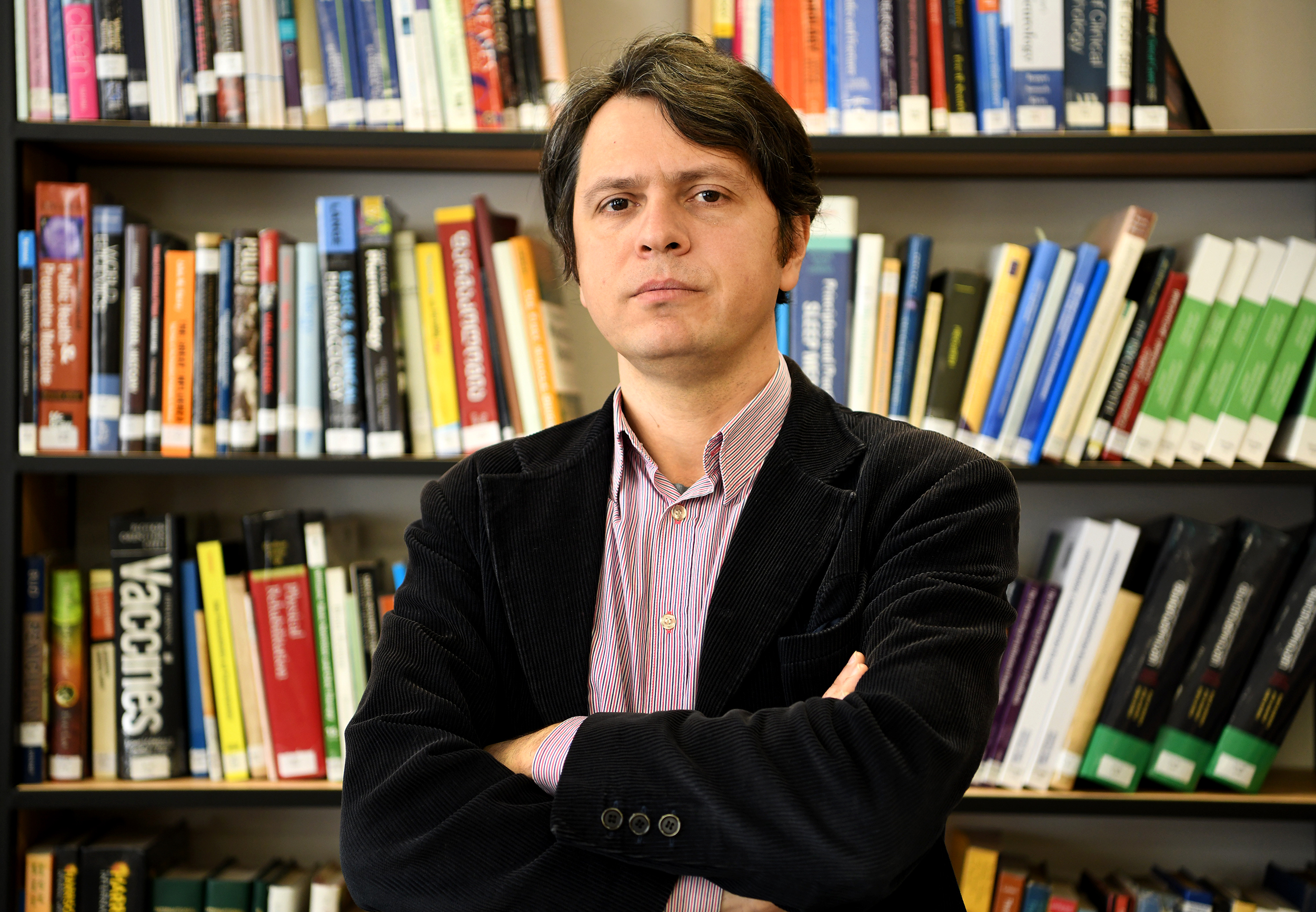
Giorgi Meladze[1]
Introduction
Recent commentaries on Miladze v. Georgia, including Babette De Naeyer’s analysis on Strasbourg Observers, or Jacob Mchangama’s analysis on his personal Substack make an important contribution by unpacking the judgment’s implications for vulgar, offensive, and politically charged expression online. Such interventions are valuable because they move the discussion beyond formal doctrine and expose what is at stake in Article 10 cases. Yet the central issue now requires sharper focus: the Court’s decision was made in a contextual vacuum. By validating domestic reasoning without fully confronting Georgia’s deteriorating human rights environment, the judgment risks producing devastating local effects and, in the long term, damaging the Court’s own institutional reputation.
The issue is not whether the European Court of Human Rights should adopt the American doctrine of “fighting words,” or whether Article 10 should protect every vulgar outburst directed at public officials. The real issue is whether Strasbourg applied its own doctrine of “context” with enough seriousness. Miladze is troubling not because it rejected an American model of speech protection, but because it treated a politically sensitive case from Georgia as if it had arisen in an ordinary institutional environment. In a country experiencing democratic decline, selective enforcement and growing pressure on critical voices, context is not political decoration but a part of the legal analysis.
Decision N4/4998-26 by Judge Chagunava of the Tbilisi City Court and dated 13 May 2026, illustrates how domestic courts may instrumentalize the European Court of Human Rights’ judgment in Miladze v. Georgia. (The decision was discovered by lawyer Mikheil Zakareishvili.)
Judge Chagunava upheld a fine of 3,000 GEL and relied on the Miladze judgment, even though the domestic decision is dated 13 May 2026—before the ECtHR’s judgment in Miladze had been published. The most plausible explanation is that, although the decision was formally issued on 13 May, its written reasoning was finalized in June, after the Miladze judgment became publicly available. By citing Miladze, the court appears to have sought to bolster the legitimacy of the sanction despite this chronological inconsistency.
The decision by Judge Zviad Tsekvava to sentence journalist Vakho Sanaia to 14 days’ imprisonment followed by his arrest on July 22 for sharing a satirical post on Facebook is another example of this pattern.
- What the first article argued and what the discussion misunderstood
The previous blog that I authored did not defend the applicant’s language. It did not argue that sexually explicit insult should automatically receive Article 10 protection because it was directed at public officials. Its argument was narrower and more institutional: the Court accepted the domestic courts’ framing too readily and did not sufficiently examine how a sanction for vulgar political expression operates in Georgia’s current political environment.
The judgment itself recognized that the video formed part of a public debate on urban transport reform, but it gave decisive weight to the Court’s view that the language amounted to “violent verbal aggression” and wanton denigration of identifiable public officials. It also relied on the viral reach of TikTok, the platform’s algorithmic amplification, youth engagement, the minimum fine imposed and the domestic courts’ structured balancing exercise.
Those factors are relevant, but they are not complete. In politically sensitive cases, the legal question is not exhausted by content, tone, platform and sanction. A court must also ask what kind of state is applying the restriction, whether similar standards are applied to government-aligned speakers, whether the sanction is part of a wider pattern of disciplining dissent, and whether the judgment can be domestically converted into permission for broader surveillance and punishment of political speech.
This is where much of the public discussion went wrong. It reduced the problem to whether Europe tolerates less offensive speech than the United States. The real question is why the long held doctrine that expression must be assessed in context became so thin when the context was Georgia’s political environment.
- Why the US-versus-Europe framing is inadequate
Comparative free speech arguments have value, but they can also mislead. It is true that American constitutional law generally protects more offensive political speech than European human rights law. It is also true that Article 10 permits restrictions for legitimate aims such as the protection of the rights of others, public order and morals. Unlike the First Amendment, Article 10 is explicitly structured around balancing. But Miladze’s case is not about balancing. The case touches on deeper issue when the state restricting speech is itself part of the problem.
Looking at the Strasbourg doctrine the pattern is obvious. In Castells v. Spain, the Court stressed that the limits of permissible criticism are wider with regard to government than private citizens and that the dominant position of government requires restraint in resorting to criminal proceedings. In Lingens v. Austria, it held that politicians must tolerate closer public scrutiny than private persons. In Otegi Mondragon v. Spain, it repeated that there is little scope under Article 10 for restrictions on political speech or debate on matters of public interest.
The real difficulty in Miladze is therefore not that the Court rejected a US-style free speech approach. It is that it treated the domestic balancing exercise as sufficient without asking whether the balancing occurred within a political environment where legal standards may be selectively applied.
- What Strasbourg doctrine actually says about context
The Court’s own case law makes context central to Article 10 analysis. Handyside v. the United Kingdom is often remembered for the formula that freedom of expression protects not only ideas that are favorably received, but also those that “offend, shock or disturb.” But the deeper principle is that “necessity in a democratic society” requires a concrete assessment of the social and political circumstances of the interference.
That approach becomes especially important in political cases. In Ceylan v. Turkey, the Grand Chamber found a violation where the applicant had used virulent language in a political text, emphasizing that there is little scope for restrictions on political speech and that the applicant had not incited violence. In Incal v. Turkey, the Court similarly found that political criticism could not be restricted merely because it was harsh or disturbing, especially where there was no incitement to violence, hostility or hatred. These cases do not give speakers unlimited protection. They require courts to distinguish real risks from official discomfort.
The same logic appears in cases concerning protest and opposition. In Stankov and the United Macedonian Organisation Ilinden v. Bulgaria, the Court held that measures suppressing assemblies could not be justified merely because the views expressed were unpopular or disturbing, absent a real threat to public order. In Navalnyy v. Russia, the Grand Chamber did not treat repeated arrests as isolated administrative incidents. It examined the pattern and found that the authorities’ actions pursued an ulterior purpose, namely suppressing political pluralism. In Selahattin Demirtaş v. Turkey, the Grand Chamber again looked beyond formal legal categories and found that the applicant’s detention pursued the ulterior purpose of stifling pluralism and limiting freedom of political debate.
These judgments matter for Miladze because they show that Strasbourg is capable of seeing law as a political instrument. The Court does not always stop at the formal label attached by domestic authorities. It asks whether public order, criminal law, administrative proceedings or national security are being used for their stated purpose or for a hidden political one. Miladze sits uneasily with that tradition. The Court saw the offensive expression, the platform and the fine. It did not adequately see the political environment into which its judgment would return.
- How context should be argued in sensitive cases
A context-sensitive Article 10 argument should not become a loose political essay. Lawyers and courts need a disciplined method. Context must be pleaded, evidenced and connected to the Convention test.
First, the applicant should reconstruct the political background with verifiable sources. In the Georgian context, this would include reports by OSCE/ODIHR, the Council of Europe, the European Parliament, Human Rights Watch, Amnesty International and domestic watchdog organizations. The purpose is not to ask Strasbourg to decide the entire political situation of the country. The purpose is to show whether the interference occurred in an environment where legal tools are being used to pressure critical voices.
Second, the speaker’s role matters. A journalist, activist, courier, protester, opposition politician or ordinary citizen may speak from different institutional positions, but Article 10 does not protect only professional speakers. In Miladze, the applicant’s status as a courier criticizing transport policy was relevant. He was not a media company, political party or organized campaign machine. He was an ordinary citizen speaking angrily about public power.
Third, the target of expression must be identified carefully. Speech directed upward at public officials has a different democratic meaning from speech targeting private individuals or vulnerable groups. This does not make all upward insult protected. It does mean that courts should ask whether the state is protecting dignity or insulating officials from public anger.
Fourth, courts should examine neutrality and selectivity. If vulgar, hateful or degrading language by government officials and pro-government media is tolerated, while anti-government speech is punished, the state’s Article 10 justification becomes weaker.
Fifth, lawyers should document patterns of enforcement. One administrative fine may appear minor in isolation. It may look different if it is accompanied by protest-related arrests, prosecutions of journalists, monitoring of online speech, public denunciation of NGOs and vague laws against “insult,” “foreign influence” or “aggressive communication.”
Sixth, chilling effect should be argued concretely. It is not enough to say that a sanction may chill speech. The argument should explain who is likely to be chilled, activists, journalists, protesters, public employees, ordinary citizens, and why the sanction signals risk beyond the applicant’s case.
This method does not ask Strasbourg to become a political tribunal. It asks the Court to apply Article 10 as Article 10 already requires: through a concrete assessment of power, purpose, effect and safeguards.
- What this means for Miladze v. Georgia
Applied to Miladze, this framework does not require the Court to praise the applicant’s language or to declare all offensive online speech protected. It requires the Court to ask three questions it largely avoided.
First, the Court should have noted Georgia’s democratic decline. By 2026, credible international reporting had documented serious concerns about restrictions on expression, assembly, civil society and media freedom, as well as politically motivated proceedings and pressure on critics. The Court should have acknowledged that a Georgian case concerning punishment of anti-official online expression does not arise in a neutral institutional setting.
Second, the Court should have addressed the culture of political debate and government-fueled hate speech. If the state itself, through officials, ruling party representatives or aligned media, contributes to aggressive and dehumanizing political communication, then its effort to punish a citizen for vulgarity requires heightened scrutiny. The issue is not hypocrisy as a moral complaint. It is selectivity as a legal problem. Article 10 analysis should ask whether the state is improving public discourse or monopolizing the right to be abusive.
Third, the Court should have warned against using Miladze and Article 10 doctrine against fundamental rights. Even if the Court found no violation, it could have written narrowly. It could have emphasized that the judgment does not authorize proactive monitoring of online political expression, selective punishment of critics, broad administrative control over “aggressive communication,” or the transformation of civility rules into anti-dissent tools. Such caution would have been consistent with Strasbourg’s institutional role. The Court cannot control how governments cite its judgments, but it can reduce the risk of abusive citation.
The danger is not theoretical. In my previous blog I already noted that the judgment entered Georgian public debate alongside official discussion of a special unit to monitor hate speech, insulting campaigns and aggressive communication. In such circumstances, a judgment validating punishment of offensive online speech may be read domestically not as a narrow ruling on one TikTok video, but as European approval for a broader infrastructure of speech control.
This is when one should ask whether Strasbourg behave like Strasbourg at its best. When its own case law teaches about political context, chilling effect, public debate, selective enforcement and institutional purpose matter, court should have applied that doctrine with greater discipline.
Conclusion
Context-sensitive adjudication is not activism, exceptionalism or an Americanization of Article 10. It is part of the European Court’s own method. The Convention does not require court to protect every insult, but it does require to understand how restrictions function in the society where they are imposed.
Miladze could have been a narrow judgment about extreme online vulgarity. Instead, because of what it omitted, it risks becoming a broader precedent for selective civility. In states undergoing democratic decline, ordinary legal categories can do extraordinary political work. Public order, dignity, morality and protection from insult may all sound legitimate. However, they may also become the vocabulary through which dissent is monitored, disciplined and punished.
The Court does not need to constitutionalize vulgarity to avoid that danger. It needs only to ask the questions its own doctrine already supplies: who speaks, against whom, in what political environment, through which legal tools, with what pattern of enforcement, and with what effect on democratic debate.
[1] Giorgi Meladze is Associate Professor of Public Law at Ilia State University in Tbilisi, Georgia, and Visiting Scholar at Freie Universität Berlin. He studied law at Tbilisi State University and was a visiting scholar at Columbia Law School. His publications span Georgia, Europe, and the United States. He has collaborated with the Council of Europe, the Venice Commission, the U.N. Development Program, and the U.N. Global Compact, contributing to a global National Science Foundation-funded project published by Cambridge University Press. This publication received the 2024 Lawrence S. Wrightsman Book Award from the American Psychology-Law Society.
Note: The opinions expressed in the blog belong to the authors and may not reflect the positions of ICON•S Georgia and the editors of this blog.